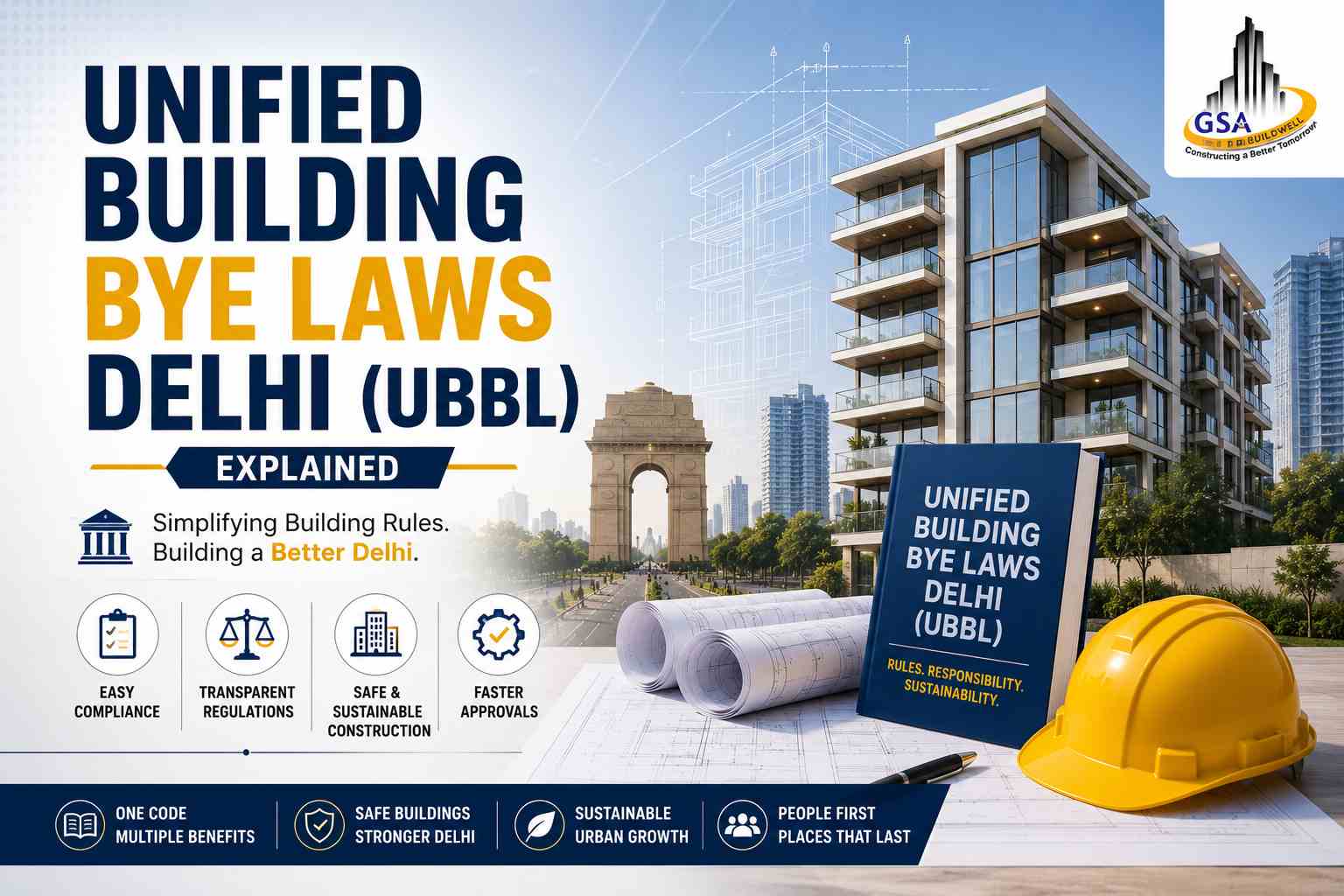
Unified Building Bye Laws Delhi (UBBL) Explained
The Unified Building Bye Laws (UBBL) Delhi are a comprehensive set of regulations that govern planning, design, construction, redevelopment, and safety standards for buildings across Delhi. Introduced to create a uniform building approval system, these bye-laws ensure that all residential, commercial, institutional, and industrial developments comply with legal, structural, environmental, and safety requirements.
Whether you are planning to build a new home, renovate an existing property, or develop a commercial project, understanding the UBBL is essential to avoid legal complications and ensure smooth approval from the concerned authorities.
The Unified Building Bye Laws (UBBL) Delhi are a comprehensive set of regulations that govern planning, design, construction, redevelopment, and safety standards for buildings across Delhi. Introduced to create a uniform building approval system, these bye-laws ensure that all residential, commercial, institutional, and industrial developments comply with legal, structural, environmental, and safety requirements.
Whether you are planning to build a new home, renovate an existing property, or develop a commercial project, understanding the UBBL is essential to avoid legal complications and ensure smooth approval from the concerned authorities.
Why Were the Unified Building Bye Laws Introduced?
Before the implementation of UBBL, different local authorities followed separate regulations, making the approval process complicated and inconsistent.
The Unified Building Bye Laws were introduced to:
- Standardize building regulations across Delhi
- Promote planned urban development
- Improve structural safety
- Ensure fire and environmental compliance
- Simplify building approval procedures
- Encourage sustainable and green construction
The bye-laws apply to projects approved by authorities such as MCD, DDA, NDMC, and Delhi Cantonment Board, depending on the property's location.
Key Objectives of UBBL Delhi
The primary goals of the Unified Building Bye Laws include:
- Ensuring public safety
- Regulating land use and construction
- Promoting accessibility for persons with disabilities
- Encouraging energy-efficient buildings
- Preventing unauthorized construction
- Maintaining proper setbacks and open spaces
- Supporting disaster-resistant construction
Major Provisions Under UBBL Delhi
1. Plot Coverage
UBBL specifies the maximum area of a plot that can be covered by the building. The permitted coverage depends on:
- Plot size
- Land use category
- Building type
This ensures sufficient open space for ventilation, landscaping, and emergency access.
2. Floor Area Ratio (FAR)
Floor Area Ratio (FAR) determines the maximum permissible built-up area on a plot.
For example:
If a plot measures 200 sq. meters and the approved FAR is 200, the total permissible built-up area would be 400 sq. meters.
The FAR varies depending on:
- Plot location
- Road width
- Master Plan of Delhi
- Building category
3. Building Height
UBBL regulates building height based on:
- Road width
- Plot size
- Fire safety requirements
- Airport Authority restrictions
- Structural safety norms
High-rise buildings require additional approvals from fire authorities and aviation agencies where applicable.
4. Setbacks
Setbacks refer to the minimum distance that must be maintained between the building and property boundaries.
Proper setbacks help provide:
- Better ventilation
- Natural lighting
- Emergency access
- Privacy
- Fire safety
Front, rear, and side setbacks vary according to plot size and building use.
5. Parking Requirements
The bye-laws specify mandatory parking provisions for different property types.
Parking norms depend upon:
- Residential units
- Commercial buildings
- Office complexes
- Hospitals
- Educational institutions
- Hotels
Adequate parking helps reduce traffic congestion and improves urban planning.
6. Fire Safety Compliance
Buildings exceeding specified height limits or occupancy requirements must comply with fire safety regulations.
Requirements may include:
- Fire exits
- Fire lifts
- Smoke detectors
- Sprinkler systems
- Fire water tanks
- Refuge areas
Approval from the Delhi Fire Service is mandatory for applicable buildings.
7. Accessibility Standards
UBBL incorporates provisions aligned with accessibility guidelines to ensure buildings are usable by everyone.
Important features include:
- Wheelchair ramps
- Accessible toilets
- Elevators
- Tactile pathways
- Barrier-free entrances
These provisions improve inclusivity in public and private buildings.
8. Rainwater Harvesting
Many developments are required to install rainwater harvesting systems.
Benefits include:
- Groundwater recharge
- Water conservation
- Reduced dependence on municipal water supply
9. Structural Safety
Buildings must be designed according to relevant Indian Standards (IS Codes) for structural safety.
Design considerations include:
- Earthquake resistance
- Wind load
- Foundation design
- Material quality
- Structural stability
Certified structural engineers are responsible for ensuring compliance.
Green Building Provisions
UBBL encourages environmentally responsible construction through:
- Solar energy systems
- Energy-efficient lighting
- Water-efficient plumbing fixtures
- Waste management systems
- Green roofs
- Sustainable building materials
These measures help reduce environmental impact while lowering long-term operating costs.
Documents Required for Building Approval
Typically, applicants may need to submit:
- Ownership documents
- Site plan
- Building plan
- Structural drawings
- Architect's certificate
- Structural engineer's certificate
- Soil investigation report (where applicable)
- Fire NOC (if required)
- Environmental clearance (for applicable projects)
The exact documentation may vary depending on the project and approving authority.
Consequences of Violating UBBL
Failure to comply with the Unified Building Bye Laws can result in:
- Rejection of building plans
- Construction stoppage notices
- Demolition of unauthorized portions
- Heavy penalties
- Delayed occupancy certificate
- Legal proceedings
Following the regulations from the planning stage helps avoid costly mistakes.
Benefits of Following UBBL Delhi
Complying with the Unified Building Bye Laws offers several advantages:
- Faster approval process
- Improved building safety
- Better resale value
- Legal compliance
- Easier financing and home loans
- Reduced risk of disputes
- Sustainable and efficient buildings
Who Should Understand UBBL?
The Unified Building Bye Laws are important for:
- Homeowners
- Property developers
- Builders
- Architects
- Civil engineers
- Interior designers
- Real estate investors
- Construction consultants
Anyone involved in planning or constructing a building in Delhi should have a clear understanding of these regulations.
Frequently Asked Questions (FAQs)
What is UBBL Delhi?
UBBL (Unified Building Bye Laws) Delhi is the common building regulation framework that governs planning, construction, redevelopment, and safety standards for buildings across Delhi.
Is UBBL applicable to residential buildings?
Yes. Residential buildings must comply with applicable provisions related to setbacks, FAR, parking, structural safety, and other development norms.
Who approves building plans under UBBL?
Building plans are approved by the competent authority such as MCD, DDA, NDMC, or Delhi Cantonment Board, depending on the property's jurisdiction.
Is rainwater harvesting mandatory?
For many categories of buildings and plot sizes, rainwater harvesting is mandatory under applicable regulations.
Why is compliance with UBBL important?
Compliance ensures legal construction, occupant safety, smoother approvals, and helps avoid penalties or demolition due to unauthorized development.
Final Thoughts
The Unified Building Bye Laws (UBBL) Delhi play a vital role in ensuring safe, planned, and sustainable urban development. They establish clear standards for construction, structural integrity, environmental responsibility, and public safety. Whether you're constructing a new building, renovating an existing property, or investing in real estate, understanding and complying with UBBL can save time, reduce legal risks, and contribute to better urban infrastructure.
As building regulations are periodically updated, always consult the latest official notifications or work with qualified architects and planning professionals to ensure your project complies with the current requirements.