
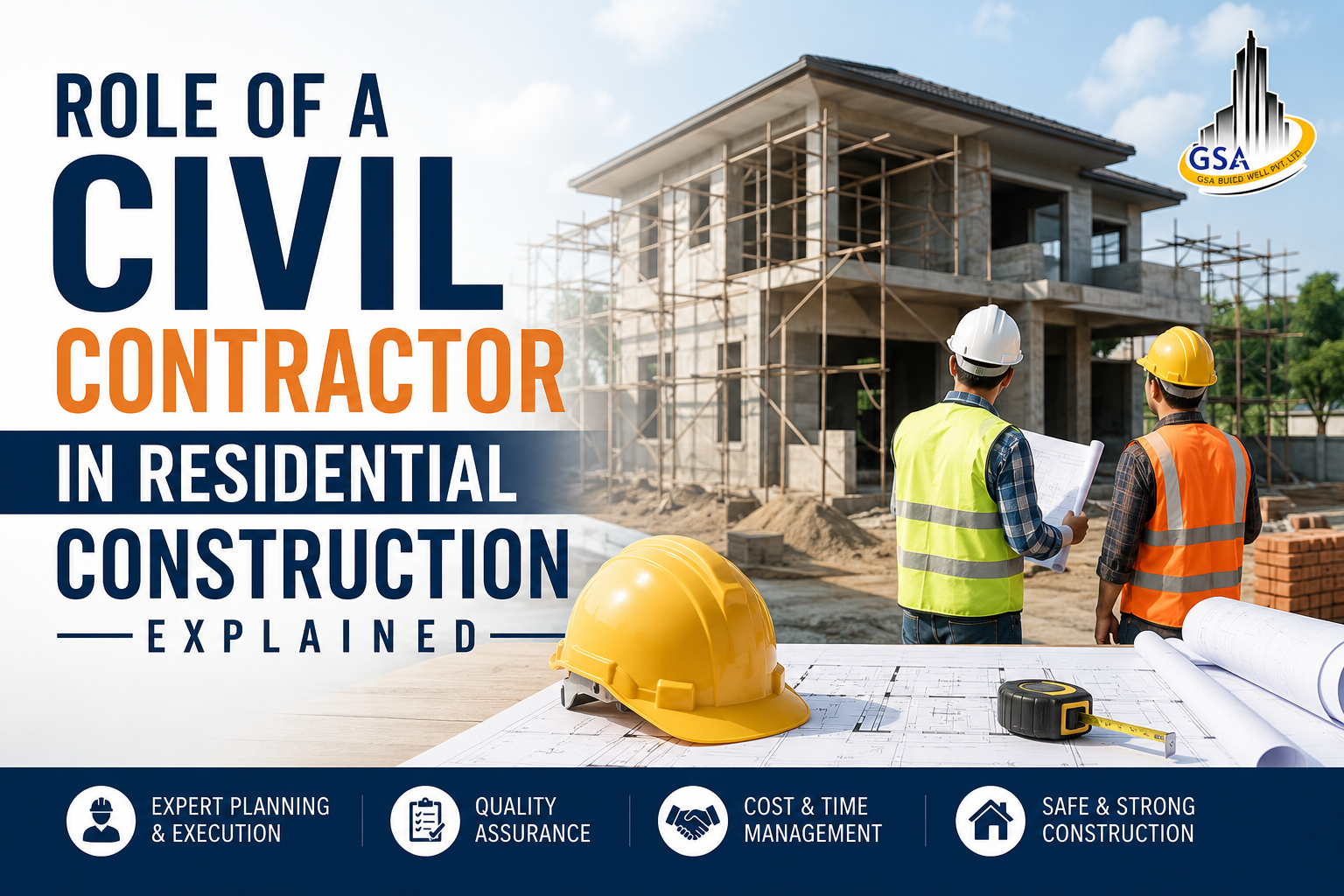
Role of a Civil Contractor in Residential Construction Explained
When most people picture building a house, they imagine an architect's drawing turning into brick and mortar almost by magic. In reality, the person who makes that transition happen — safely, on budget, and to code — is the civil contractor. They're the ones standing between a design on paper and a structure someone can actually live in.
When most people picture building a house, they imagine an architect's drawing turning into brick and mortar almost by magic. In reality, the person who makes that transition happen — safely, on budget, and to code — is the civil contractor. They're the ones standing between a design on paper and a structure someone can actually live in.
If you're planning to build or renovate a home, understanding exactly what a civil contractor does helps you know what to expect, what to ask for, and how to spot a good one from a bad one before you sign a contract.
Who Is a Civil Contractor, Exactly?
A civil contractor is the professional (or firm) responsible for managing the physical construction of a residential project — from groundwork and foundation to structural framing and finishing. They take the architect's and structural engineer's plans and turn them into an actual, buildable sequence of work.
Unlike an architect, who focuses on design and aesthetics, or a structural engineer, who calculates loads and stability, the civil contractor is responsible for execution: getting the right materials, the right labor, and the right processes on-site at the right time.
Key Responsibilities in a Residential Project
1. Site Assessment and Preparation
Before a single brick is laid, the contractor evaluates the site — soil condition, drainage, access, and any existing structures that need clearing. Poor site prep is one of the most common causes of foundation problems later, so this stage sets the tone for everything that follows.
2. Foundation and Structural Work
The contractor oversees excavation, foundation laying, and the structural skeleton of the home — columns, beams, and slabs. This is the stage where errors are hardest and most expensive to fix later, so experienced contractors lean heavily on the structural engineer's specifications rather than cutting corners.
3. Material Procurement and Quality Control
A good contractor doesn't just accept whatever materials show up cheapest. They source cement, steel, bricks, and other materials that meet the specified grade and standards, and they check incoming deliveries against those standards rather than assuming suppliers got it right.
4. Managing Labor and Subcontractors
Residential construction involves multiple trades — masons, electricians, plumbers, carpenters, painters. The civil contractor coordinates all of them, sequencing work so plumbing and electrical rough-ins happen before walls close up, and finishing trades come in only once structural work is fully cured and sound.
5. Timeline and Budget Management
Delays and cost overruns are the two things homeowners fear most. A capable contractor builds a realistic schedule, flags risks early — weather, material shortages, permit delays — and communicates proactively rather than after a problem has already blown the budget.
6. Compliance and Permits
Building codes, safety regulations, and local municipal approvals aren't optional extras — they're legal requirements. The contractor is typically responsible for making sure construction complies with the relevant building codes and that necessary inspections and approvals happen at the right stages.
7. Quality Assurance Through Completion
From curing concrete properly to checking that walls are plumb and floors are level, ongoing quality checks throughout the build prevent small issues from becoming structural or cosmetic problems after handover.
Why the Contractor's Role Matters More Than People Realize
Homeowners often focus their attention on the architect's design and skip straight to comparing contractor quotes on price. But the contractor is the one actually translating that design into a safe, durable structure. A brilliant design executed poorly results in a home with cracks, leaks, uneven floors, or worse — structural issues that surface years later.
The right contractor also acts as a practical filter on the design itself, flagging when a design detail is difficult or expensive to execute on-site and offering buildable alternatives before construction starts, not after.
What to Look for When Hiring a Civil Contractor
- Relevant experience with residential projects similar in scale to yours
- Proper licensing and insurance for the work and your local jurisdiction
- Transparent, itemized quotes rather than vague lump-sum pricing
- A clear project timeline with milestones, not just a start and end date
- References or past projects you can actually see or visit
- Clear communication habits — how they handle changes, delays, and problems when they come up
Final Thought
A home is only as good as the hands that built it. The architect designs the vision, the structural engineer ensures it can stand, but it's the civil contractor who turns both into a livable, safe, code-compliant home — on time and within budget when the right processes are followed. Choosing this role carefully is one of the most consequential decisions in any residential construction project.
At GSA Buildwell, this is the role we take seriously on every residential project we take on — from site assessment through final handover. We manage the coordination, quality control, and compliance that a home actually depends on, so what gets handed over isn't just a finished structure, but one built the way it was meant to be.