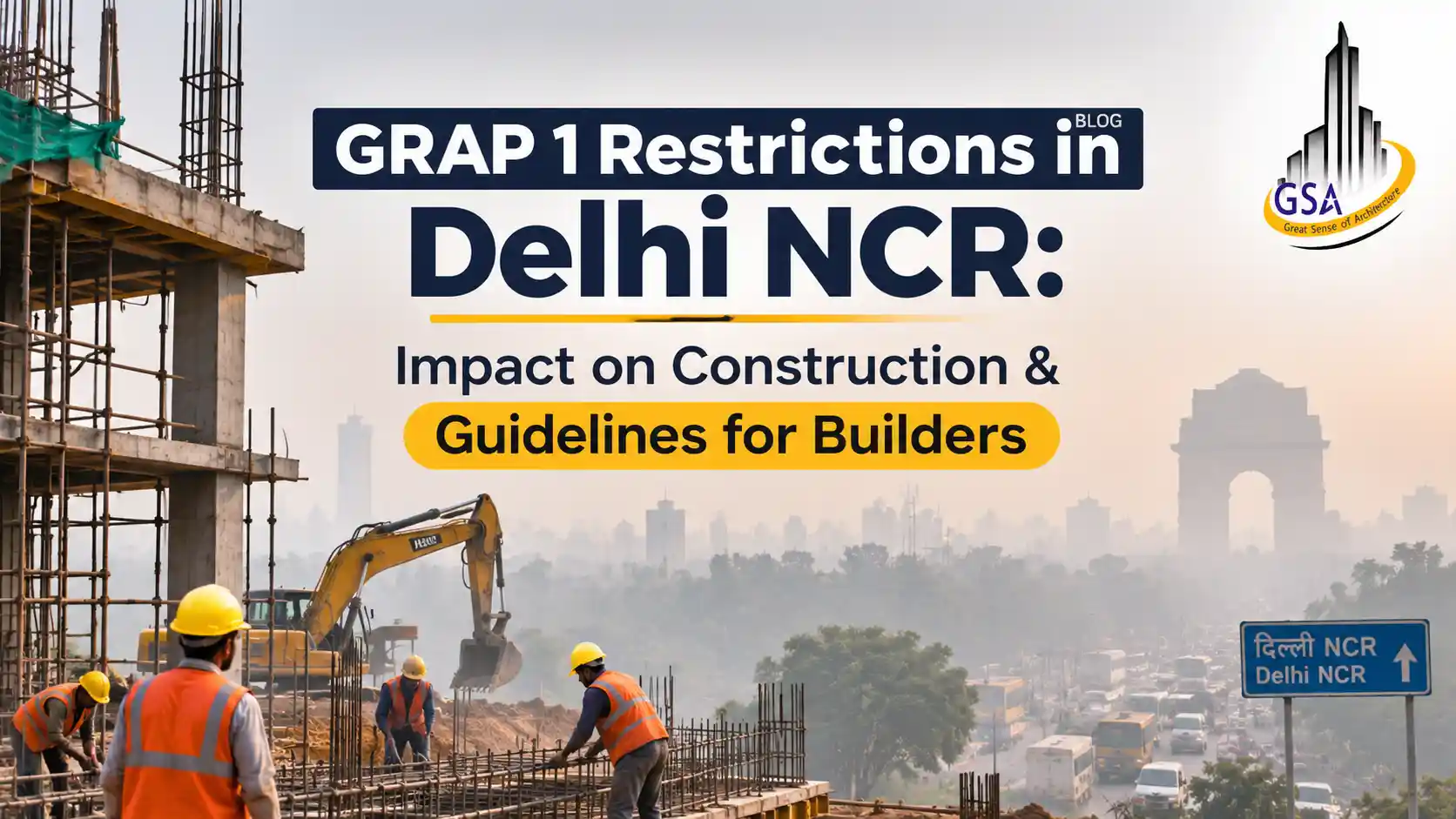
GRAP 1 Restrictions in Delhi NCR: Impact on Construction & Guidelines for Builders
Air pollution is a major concern in Delhi NCR, particularly during the winter months, when dust, vehicle emissions, and construction activities contribute to declining air quality. To control pollution before the situation becomes worse, authorities introduce different levels of Restrictions under the graded response action plan. For builders, contractors, and construction companies, understanding the restrictions is very important. Even when the construction work you would like to do is allowed, sites need to follow specific dust control measures and waste management practices.
GRAP 1 is a set of emergency measures introduced to control air pollution in Delhi and the surrounding National Capital Region. It is implemented by the Commission for Air Quality Management based on air quality conditions and forecasts. The plan follows a graded approach. This means restrictions become stricter as pollution levels increase. Instead of waiting for air quality to reach extremely poor levels, authorities introduce measures at the earlier stages. Each stage introduces additional pollution control measures. For the construction industry, stage one focuses on controlling dust emissions and managing construction-related activities.
What is GRAP 1 and why is it implemented in Delhi NCR?
GRAP 1 is a set of emergency measures introduced to control air pollution in Delhi and the surrounding National Capital Region. It is implemented by the Commission for Air Quality Management based on air quality conditions and forecasts. The plan follows a graded approach. This means restrictions become stricter as pollution levels increase. Instead of waiting for air quality to reach extremely poor levels, authorities introduce measures at the earlier stages. Each stage introduces additional pollution control measures. For the construction industry, stage one focuses on controlling dust emissions and managing construction-related activities.
What are GRAP Stage 1 restrictions for construction sites?
When stage one is implemented, construction activities are not automatically banned across Delhi NCR. But you need to follow the procedures perfectly.
Proper storage of construction materials
Materials like cement, sand, bricks, and other construction supplies can release dust when left exposed. You need to ensure that the materials are stored properly and covered whenever required.
Covering construction-based joining transportation
Construction and demolition waste can create considerable dust during loading or unloading. Under GRAP 1, stage one construction waste and materials must be transported properly. You should also ensure that the waste goes to authorized disposal or processing facilities rather than being dumped in open areas.
Water sprinkling and anti-smog measures
Regular water sprinkling helps control dust generated by construction activities, especially in open areas and around material storage zones. Construction sites should follow the applicable requirements for water sprinkling and anti-smog guns. The equipment should be used appropriately to reduce dust emissions.
What happens if builders do not follow GRAP 1 guidelines?
Non-compliance with GRAP 1 requirements can lead to inspections and enforcement action by the concerned authorities. Depending on the nature of the violation, construction companies might face environmental notices, penalties, or other regulatory action under applicable laws and directions. Authorities can also stop activities and projects that fail to meet mandatory requirements. For example, a construction project measuring 500 square meters or more that does not fulfill its applicable registration and monitoring requirements might face restrictions on construction activities.
GRAP 1 stage one is an important step towards controlling air pollution in Delhi NCR. No doubt it does not introduce a complete construction ban; it requires you to take dust management and medical storage measures more seriously. For construction companies, following the guidelines is not just about avoiding penalties; it's also about maintaining cleaner air and reducing the impact of building activities on surrounding communities.
Also Read : Modern Office Interior Design Ideas for Businesses in Delhi NCR