
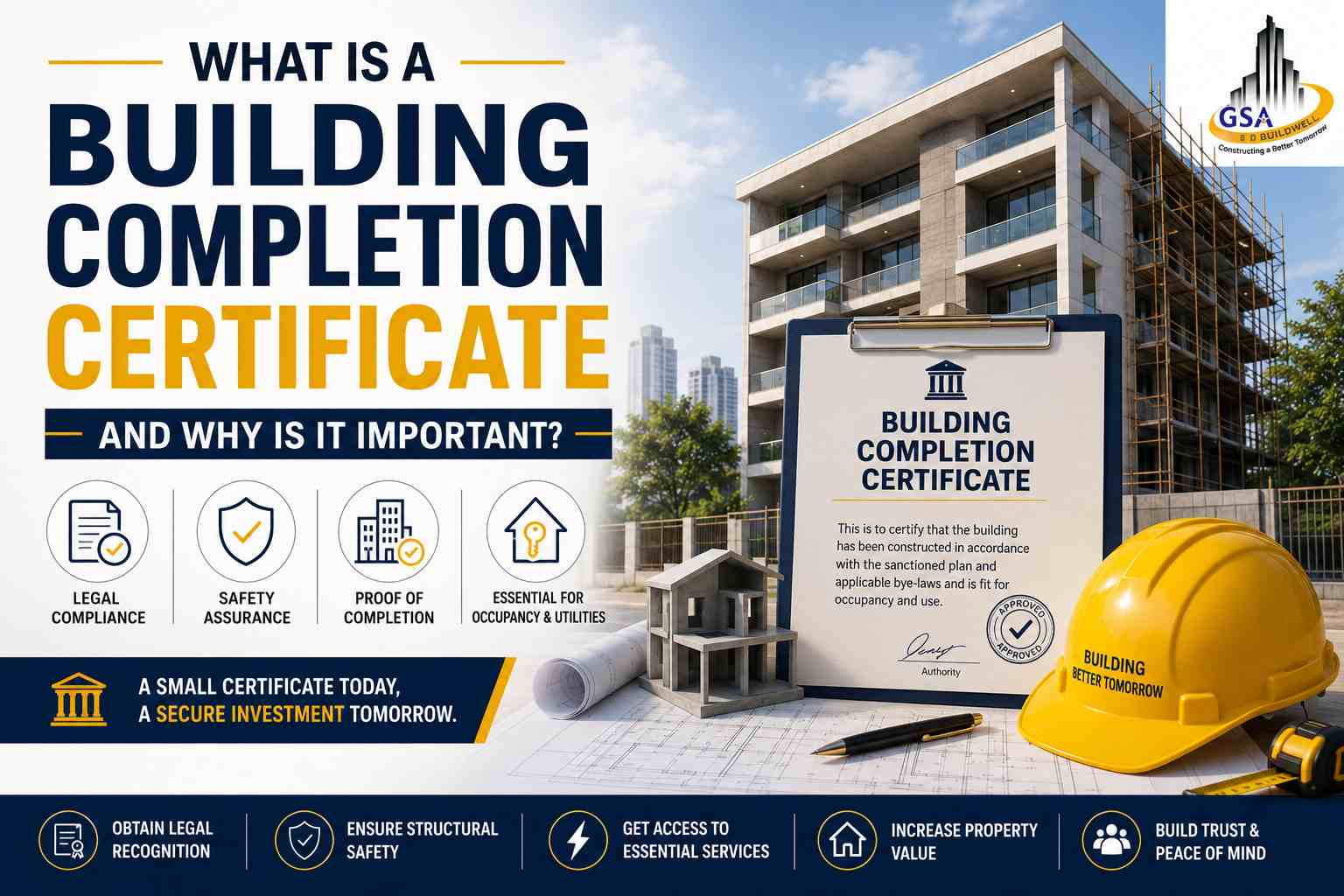
What is a Building Completion Certificate and Why is it Important?
A Building Completion Certificate (CC) is an official document issued by a local municipal authority or a licensed engineer confirming that a building has been constructed exactly as approved in its sanctioned plans and in line with local development regulations. It's different from the initial building plan approval, which only grants permission to start construction — the CC comes at the end, verifying that what actually got built matches what was approved. Without it, buyers can run into serious complications: rejected home loans, blocked property registration, denied utility connections, and even the legal risk of demolition if unauthorized construction is discovered later. For anyone buying, selling, or financing property in India, checking for a valid Completion Certificate isn't optional due diligence — it's a non-negotiable step.
A Building Completion Certificate (CC) is an official document issued by a local municipal authority or a licensed engineer confirming that a building has been constructed exactly as approved in its sanctioned plans and in line with local development regulations. It's different from the initial building plan approval, which only grants permission to start construction — the CC comes at the end, verifying that what actually got built matches what was approved. Without it, buyers can run into serious complications: rejected home loans, blocked property registration, denied utility connections, and even the legal risk of demolition if unauthorized construction is discovered later. For anyone buying, selling, or financing property in India, checking for a valid Completion Certificate isn't optional due diligence — it's a non-negotiable step.
What Exactly Does a Completion Certificate Confirm?
A Completion Certificate certifies three things at once: that the building was constructed within the boundaries of its approved plan, that it follows local construction codes covering height, materials, and safety standards, and that it's genuinely ready for occupancy. Local authorities inspect the property physically before issuing the certificate, checking compliance against the sanctioned plan rather than simply accepting paperwork at face value.
Why the Completion Certificate Matters So Much
It Legitimizes the Building
The CC is what legally confirms a building isn't an unauthorized or partially compliant structure. Without it, a buyer has no real assurance that the property was built the way it was supposed to be, which puts them at direct legal risk if issues surface later.
It's Required for Loans and Registration
Banks and financial institutions scrutinize completion documentation closely before approving a home loan, and property registration offices typically require it as well. A missing CC can delay or completely block both processes, sometimes derailing a purchase after months of progress.
It Enables Utility Connections
Permanent electricity, water, and sewage connections generally can't be finalized without a completion certificate in place. Buildings without one often end up relying on temporary or informal connections, which creates its own set of long-term headaches.
It Protects Resale Value
A property without a completion certificate is far harder to sell later, since the next buyer's lender and legal advisors will run into the same missing-document problem. Buildings with clean, complete documentation tend to hold their value and sell more smoothly.
Expert Tip
If you're buying a resale flat, don't just ask whether a completion certificate exists — ask to see it directly, and confirm it matches the specific unit and building you're purchasing. In larger developments, it's possible for a CC to cover only part of a project, leaving certain blocks or phases without one.
Under India's RERA framework, builders are required to obtain both the CC and OC before offering possession to buyers, and must transfer these documents to the buyers' association once a majority of units are occupied.
What Happens If You Skip the Completion Certificate
Taking possession of a flat without a completion certificate carries real risk. The building may not have actually been inspected for plan compliance, meaning any unauthorized deviations from the approved design go unchecked. Buyers can face rejected loan applications, legal disputes during resale, and in more serious cases, demolition orders if the construction is later found to violate approved plans. It's a risk that rarely justifies whatever time it might save during the purchase process.
How to Obtain a Completion Certificate
- Confirm construction is finished according to the sanctioned building plan, including structural work, finishing, and safety installations.
- Gather required documents, including the approved building plan, No Objection Certificates from relevant departments, and a structural safety certificate.
- Apply through the local municipal authority, often via an online portal depending on the state.
- Undergo a physical site inspection, since authorities verify compliance in person even where the application itself is digital.
- Receive the certificate, typically within three to six weeks, though delays can occur if documentation is incomplete or construction issues are found.
Common Mistakes to Avoid
- Assuming plan approval and a completion certificate are the same thing, when plan approval only permits construction to begin
- Taking possession based on a promised OC, without written confirmation that the OC receipt is a condition of possession
- Not checking whether the CC covers your specific unit or block, especially in large, phased developments
- Ignoring the CC when buying resale property, assuming an older building is automatically compliant
- Delaying the CC application after construction is finished, which can push back registration, loans, and utility connections unnecessarily
Many businesses work with experienced digital marketing agencies like Brandlogies to create accurate, buyer-focused educational content around real estate compliance topics like this one.
Making the Completion Certificate a Non-Negotiable Check
A Building Completion Certificate isn't paperwork you can safely skip or assume exists — it's one of the clearest signals that a property was built the way it was supposed to be, and it directly affects your ability to register, finance, insure, and eventually resell it. Before finalizing any purchase, confirm the CC exists, matches your specific unit, and has been properly transferred where required. Pair that check with confirming the Occupancy Certificate as well, since the two work together to protect your legal standing and long-term investment in the property.
Frequently Asked Questions
1. What is a Building Completion Certificate?
It's an official document confirming that a building was constructed according to its approved plans and local development regulations.
2. Is a Completion Certificate the same as an Occupancy Certificate?
No, the CC confirms construction compliance, while the OC, issued afterward, confirms the building is safe to occupy.
3. Can I get a home loan without a Completion Certificate?
It's very difficult, since banks generally require a valid CC before approving a home loan against the property.
4. How long does it take to get a Completion Certificate in India?
Typically three to six weeks after applying, though delays can occur due to missing documents or construction issues.
5. What happens if I buy a flat without a Completion Certificate?
You risk legal complications, rejected loans, difficulty reselling, and in serious cases, demolition if unauthorized construction is found.
6. Can I apply for a Completion Certificate before construction is fully finished?
Yes, a provisional completion certificate is available in some cases, valid for six months while remaining work is finished.
7. Who issues the Completion Certificate?
The local municipal authority or a licensed engineer, depending on state regulations.
8. Can I download my Completion Certificate online?
In many states, yes — municipal portals allow property owners to check application status and download the certificate once approved.